What is a Caveat and what purpose does it serve?
Caveat is essentially an official record of interest lodged against ownership of a property/land to prevent any dealing over the said property/land. That is to say that it is a legal restriction under the National Land Code (Revised 2020) (“NLC”) that states: –
“The caveat is a mechanism that prevents the registration of the transaction under the NLC to protect the interests of certain parties.”
Who can enter a Caveat?
a. Any person or body claiming title or registrable interest or rights over any property/land OR any
person or body claiming to be beneficially entitled under any trust affecting such property/land.
b. The most common scenarios where a private caveat is entered are as follows: –
i. when someone has entered into a sale and purchase agreement to buy the property/land and the deposit has been paid, pending completion of the sale and purchase transaction;
ii. when a person or company has taken a charge over the property/land but the charge is pending registration at land office; and
iii. a beneficiary under a trust to prevent dealings by the trustee.
What happens after a caveat is lodged?
Once a caveat application is received and lodged by the land office, the land office will then issue a notice to the registered landowner, informing them that a caveat has been lodged against the property/land. There are 4 types of Caveats under the NLC as follows: –
a. Registrar’s Caveat (Section 319 – 321 of the NLC)
b. Private Caveat (Section 322 – 329 of the NLC)
c. Lien-Holder’s Caveat (Section 330 – 331 of the NLC)
d. Trust Caveat (Section 332 – 333 of the NLC)
REGISTRAR’S CAVEAT
a. Registrar’s Caveat is and can only be entered or lodged by the Registrar for the following reasons: –
i. prevention of fraud;
ii. protecting interests of the Federation/ State Authority OR any minor, person with mental disorder/unsoundness of mind or owner absent from Federation;
iii. protection of unsecured government debts; and/or
iv. protection of register pending correction of errors on register document of title.
b. It prevents the registration of dealings (for e.g., transfer, charge and/or lease) over the property/
land which were presented to the land registry prior to the entry of Registrar’s caveat.
c. Registrar’s Caveat shall continue in force until it is removed by the caveator, Registrar and/or court order.
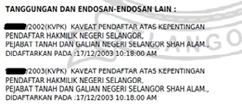
d. Example of endorsement of Registrar’s Caveat: –
PRIVATE CAVEAT
a. Same as Registrar’s Caveat, private caveat prevents registration of dealings over the property/land.
b. Lodgment of Private Caveat is to restrain the registered owner from dealings on the property/land (given that the caveator’s consent (the person who enters the caveat) must be obtained before any dealing can be executed on the property/land)
c. A caveator must show caveatable interest in order to lodge a private caveat on a piece of land. Caveatable interest would refer to any registrable title or interest in the land.
d. However, one should take note that the Private Caveat will lapse at the expiry of 6 years unless it is extended by way of a court order. In applying for a court order for extension, the application must meet the following requirements: –
i. That the caveator has a caveatable interest;
ii. Whether the caveator’s claim has a serious question to be tried in court; and
iii. Whether on the balance of convenience, it would be better to allow a caveat to remain in force until a trial.
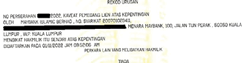
e. Example of endorsement of Private Caveat: –
LIEN-HOLDER’S CAVEAT
a. Lien is a right to keep possession of property belonging to another person until a debt owed by that person is discharged.
b. Lien-Holder’s Caveat is entered by someone with whom the original title has been deposited as security for a loan.
c. The function of Lien-Holder’s Caveat is to prevent the registration of dealings over the property/land.
d. Lien-Holder’s Caveat does not lapse at the expiry of 6 years and can only be removed by the caveator, land office and/or court order.
e. Example of endorsement of Lien-Holder’s Caveat: –
TRUST CAVEAT
a. Trust Caveat is a caveat entered in respect of a trust property to protect the property/land or interest which is expressed to be held by any person or body as trustee or the settlor of the property/land or interest.
b. Trust Caveat prevents the registration of dealings over the trust property/land.
c. A Trust Caveat shall continue in force until cancelled by Registrar on application by trustees and beneficiaries.
This article is intended to be informative and not intended to be nor should be relied upon as a substitute for legal or any other professional advice.
About the author
Elise Ng Yee Suang
Principal Associate
Banking & Finance, Real Estate
Halim Hong & Quek [email protected]

Land Caveats: What Are They and the Different Types of Land Caveats
What is a Caveat and what purpose does it serve?
Caveat is essentially an official record of interest lodged against ownership of a property/land to prevent any dealing over the said property/land. That is to say that it is a legal restriction under the National Land Code (Revised 2020) (“NLC”) that states: –
“The caveat is a mechanism that prevents the registration of the transaction under the NLC to protect the interests of certain parties.”
Who can enter a Caveat?
a. Any person or body claiming title or registrable interest or rights over any property/land OR any
person or body claiming to be beneficially entitled under any trust affecting such property/land.
b. The most common scenarios where a private caveat is entered are as follows: –
i. when someone has entered into a sale and purchase agreement to buy the property/land and the deposit has been paid, pending completion of the sale and purchase transaction;
ii. when a person or company has taken a charge over the property/land but the charge is pending registration at land office; and
iii. a beneficiary under a trust to prevent dealings by the trustee.
What happens after a caveat is lodged?
Once a caveat application is received and lodged by the land office, the land office will then issue a notice to the registered landowner, informing them that a caveat has been lodged against the property/land.
There are 4 types of Caveats under the NLC as follows: –
REGISTRAR’S CAVEAT
a. Registrar’s Caveat is and can only be entered or lodged by the Registrar for the following reasons: –
i. prevention of fraud;
ii. protecting interests of the Federation/ State Authority OR any minor, person with mental disorder/unsoundness of mind or owner absent from Federation;
iii. protection of unsecured government debts; and/or
iv. protection of register pending correction of errors on register document of title.
b. It prevents the registration of dealings (for e.g., transfer, charge and/or lease) over the property/
land which were presented to the land registry prior to the entry of Registrar’s caveat.
c. Registrar’s Caveat shall continue in force until it is removed by the caveator, Registrar and/or court order.
d. Example of endorsement of Registrar’s Caveat: –
PRIVATE CAVEAT
a. Same as Registrar’s Caveat, private caveat prevents registration of dealings over the property/land.
b. Lodgment of Private Caveat is to restrain the registered owner from dealings on the property/land (given that the caveator’s consent (the person who enters the caveat) must be obtained before any dealing can be executed on the property/land)
c. A caveator must show caveatable interest in order to lodge a private caveat on a piece of land. Caveatable interest would refer to any registrable title or interest in the land.
d. However, one should take note that the Private Caveat will lapse at the expiry of 6 years unless it is extended by way of a court order. In applying for a court order for extension, the application must meet the following requirements: –
e. Example of endorsement of Private Caveat: –

LIEN-HOLDER’S CAVEAT
a. Lien is a right to keep possession of property belonging to another person until a debt owed by that person is discharged.
b. Lien-Holder’s Caveat is entered by someone with whom the original title has been deposited as security for a loan.
c. The function of Lien-Holder’s Caveat is to prevent the registration of dealings over the property/land.
d. Lien-Holder’s Caveat does not lapse at the expiry of 6 years and can only be removed by the caveator, land office and/or court order.
e. Example of endorsement of Lien-Holder’s Caveat: –
TRUST CAVEAT
a. Trust Caveat is a caveat entered in respect of a trust property to protect the property/land or interest which is expressed to be held by any person or body as trustee or the settlor of the property/land or interest.
b. Trust Caveat prevents the registration of dealings over the trust property/land.
c. A Trust Caveat shall continue in force until cancelled by Registrar on application by trustees and beneficiaries.
This article is intended to be informative and not intended to be nor should be relied upon as a substitute for legal or any other professional advice.
About the author
Elise Ng Yee Suang
Principal Associate
Banking & Finance, Real Estate
Halim Hong & Quek
[email protected]